
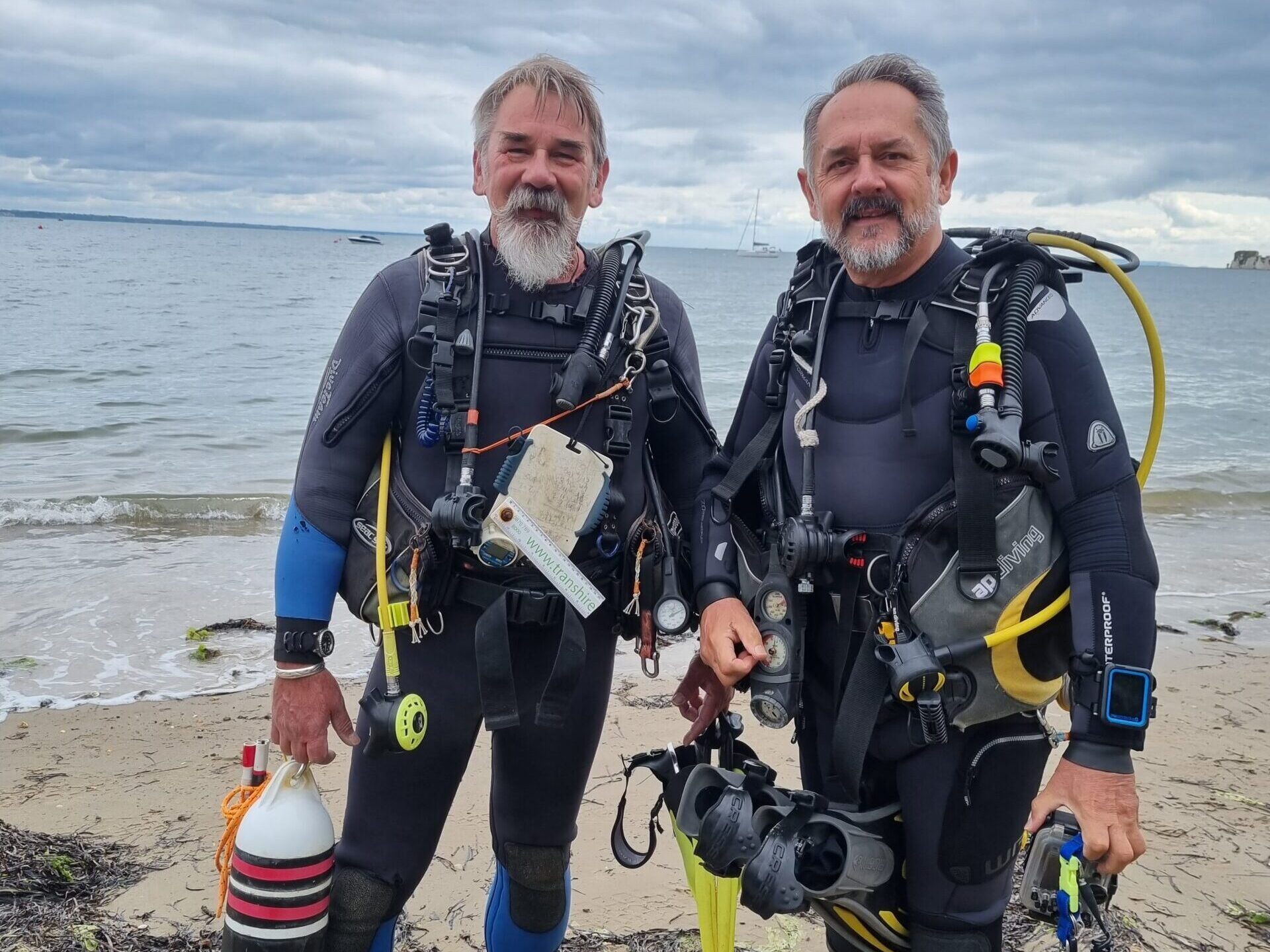
Seahorses are shy and vulnerable, and even the smallest disturbance can cause them stress. They are protected by law, and disturbing them is illegal. Please dive with care and follow this guidance to help keep these magical creatures safe.
If you plan to dive or snorkel in a way that could disturb seahorses – including taking photographs or filming – you must hold a wildlife licence from the Marine Management Organisation.
Top photo: © University of Southampton
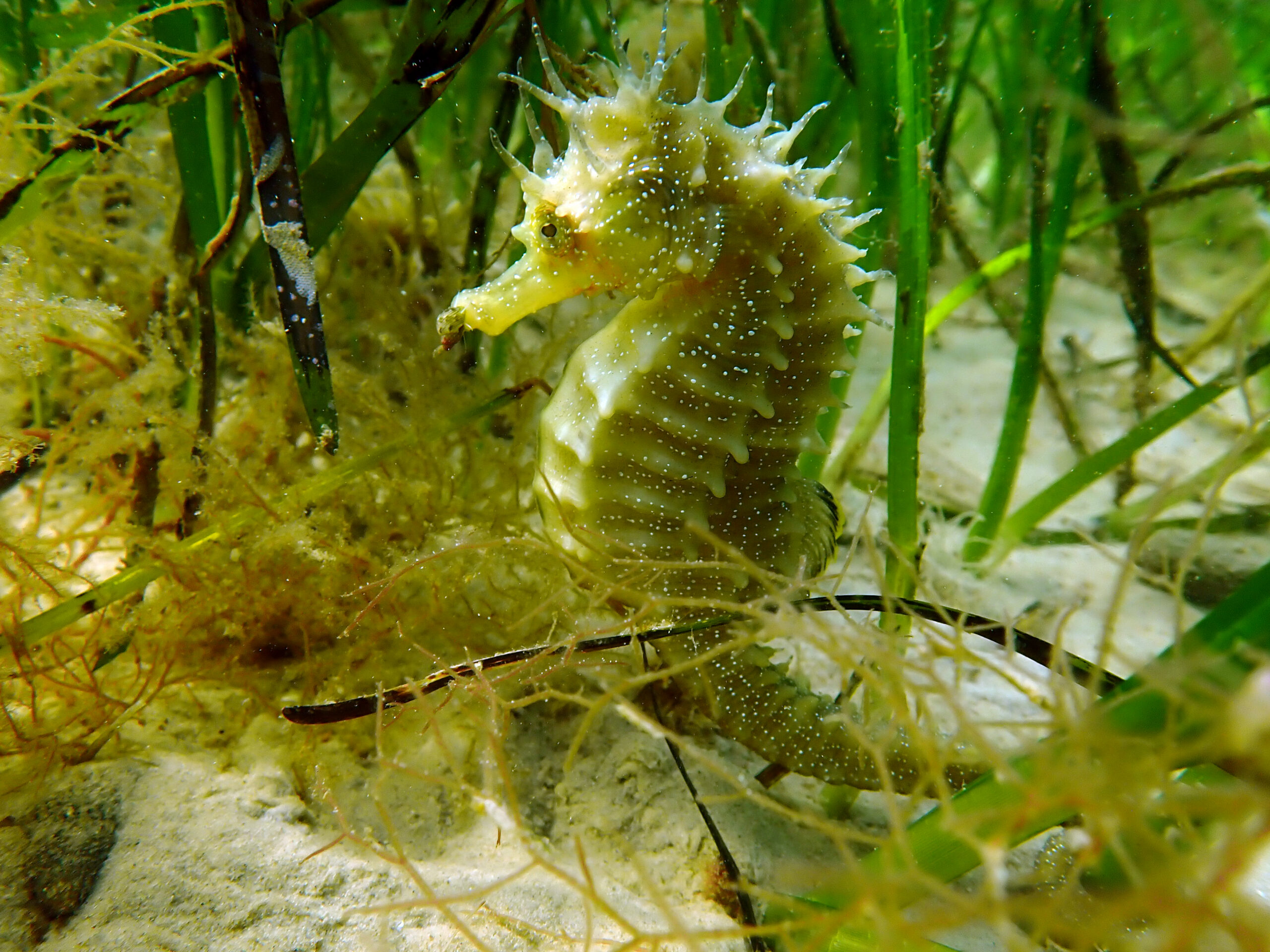
Photo: The Seahorse Trust
Keep seahorses safe
If you’re lucky enough to encounter a seahorse in the water:
• Spend no more than five minutes observing it.
• Never touch or move a seahorse. They often lie still on the seafloor – this is normal behaviour.
• Don’t crowd around a seahorse, nor pursue one if it swims away.
• If a seahorse shows signs of stress, back away slowly and calmly.
• Ensure your equipment (such as hoses and gauges) is tucked away so it doesn’t drag across the seabed.
• Spend no more than five minutes observing it.
• Never touch or move a seahorse. They often lie still on the seafloor – this is normal behaviour.
• Don’t crowd around a seahorse, nor pursue one if it swims away.
• If a seahorse shows signs of stress, back away slowly and calmly.
• Ensure your equipment (such as hoses and gauges) is tucked away so it doesn’t drag across the seabed.
Signs of stress in a seahorse
- Swimming away or making erratic movements.
- Rising up and swimming with its tail curled in.
- Holding its head in a downward, chest hugging posture.
- Turning its back on you, curling up or lying flat.
- Its colour darkening.
To find out more, visit The Seahorse Trust.