
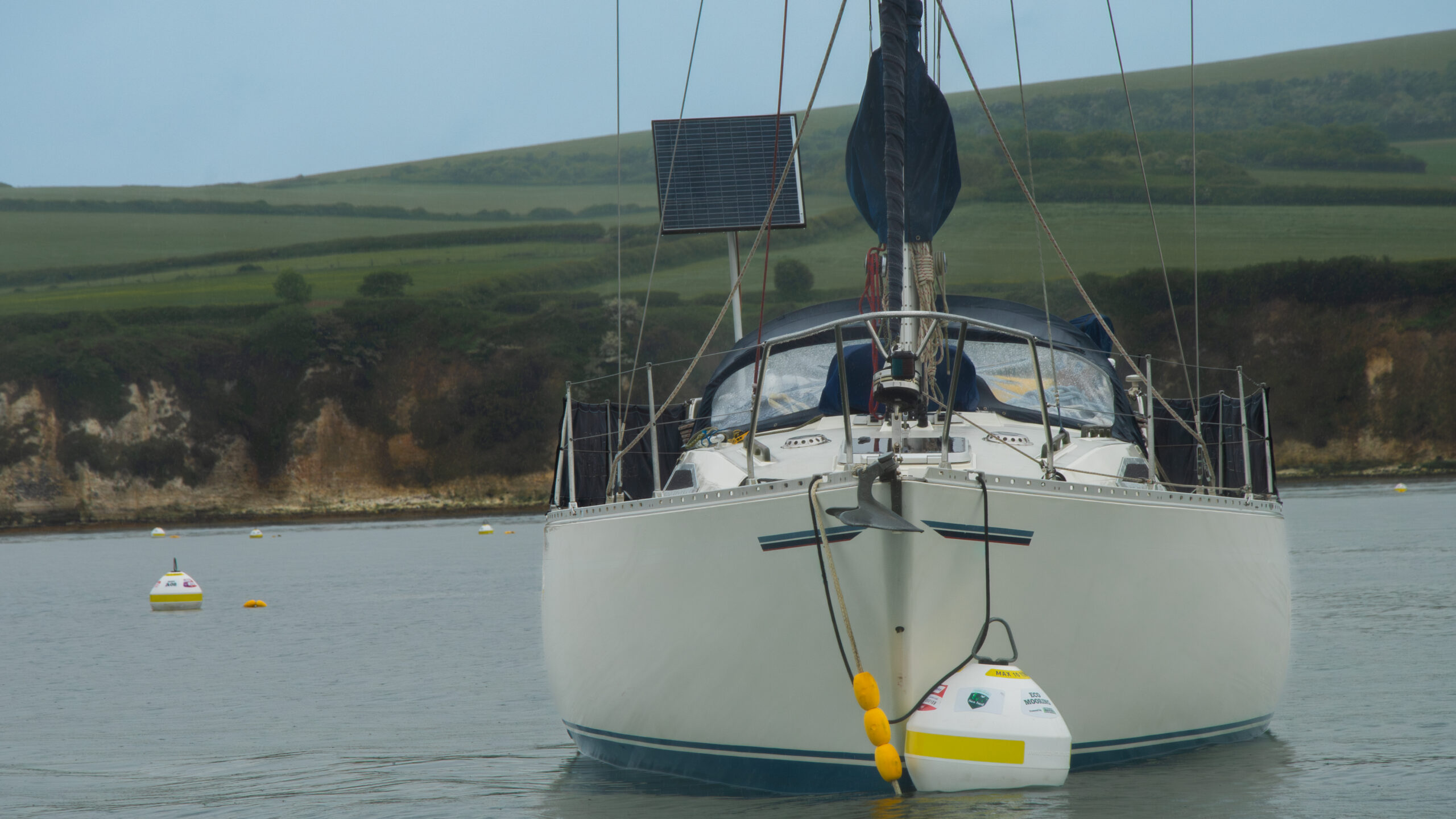
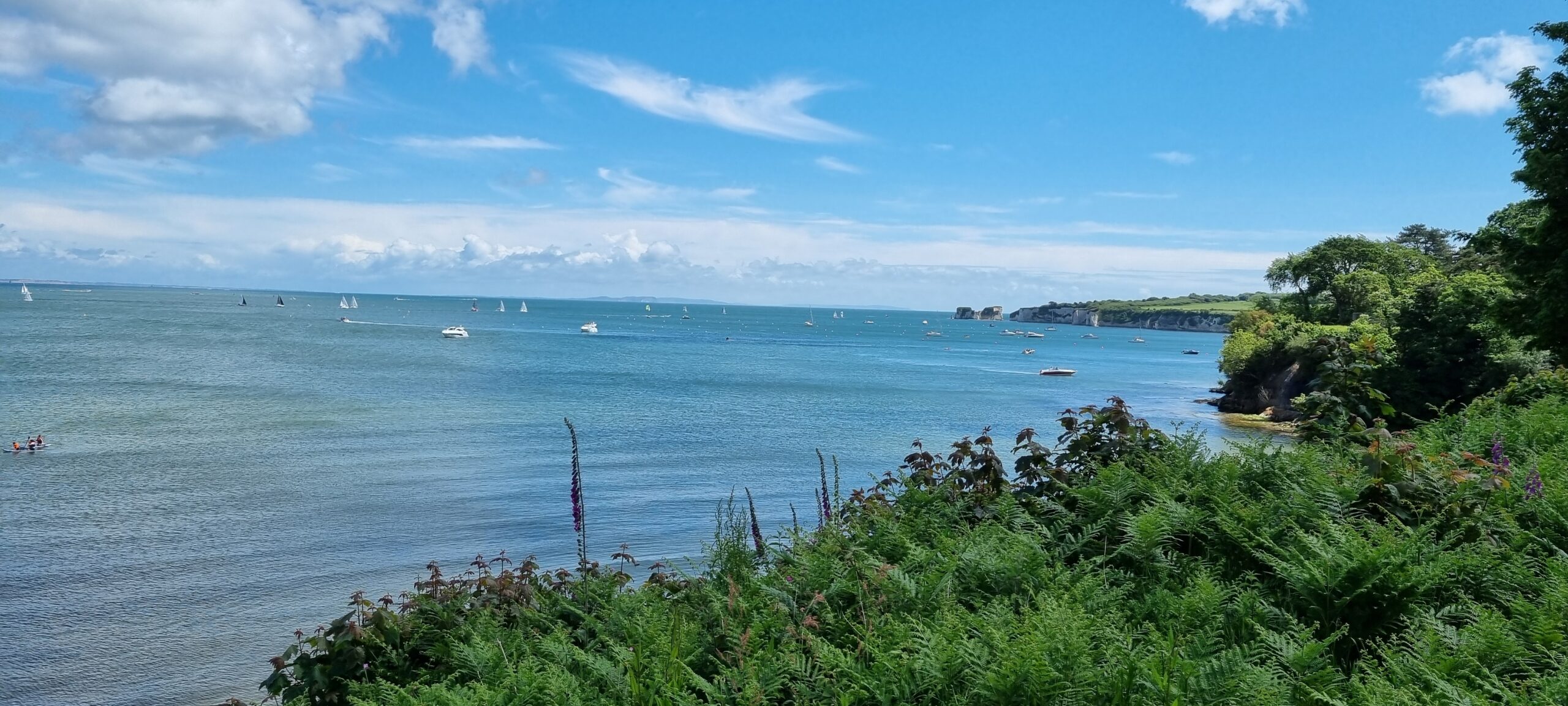
The partnership has installed 87 eco-moorings to help protect the bay’s precious seagrass meadows. These moorings are available for boaters to use for a small fee. We need to charge, as it costs money to maintain the moorings and ensure they are safe to put out each season – all the money we raise goes straight back into keeping the project going.
Eco-moorings – also known as Advanced Mooring Systems – allow boaters to secure their vessels without damaging the seagrass, unlike traditional anchors. They are now being introduced across the UK, with Studland Bay recognised as a leading example of best practice.
Top photo: © Jack Rose, the National Trust
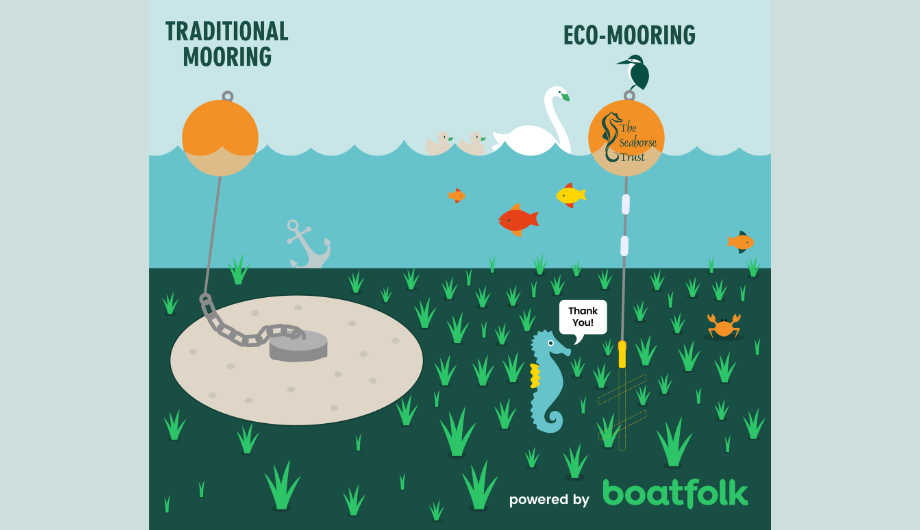
How do eco-moorings work?
• Attached to this is a two-metre elasticated riser that connects to the surface buoy.
• As the tide rises and falls, the riser stretches and retracts, preventing any scouring of the seabed and seagrass.
• Because the footprint on the seabed is tiny (about 16 cm), seagrass can grow right up to the mooring, increasing the area of this important habitat.
Using Studland Bay’s eco-moorings
Please remember when using the eco-moorings:
- Each eco-mooring has a weight limit of either 5 or 10 tonnes, clearly marked on the buoys.
- For insurance purposes, your vessel must be within the stated weight limit.
- Moorings can’t be pre-booked. If one is available, simply pick it up, note the location code on the pick-up line or buoy, then complete the simple payment process.
- The Studland Watersports team patrols the bay daily throughout the season, offering guidance, checking payments, and taking contactless payments via the ‘tap to moor’ system.
- The eco-moorings are removed over winter for servicing (up to 10 are left in place for emergency use). The fees collected are essential in funding this annual maintenance programme.
- No commercial trading.
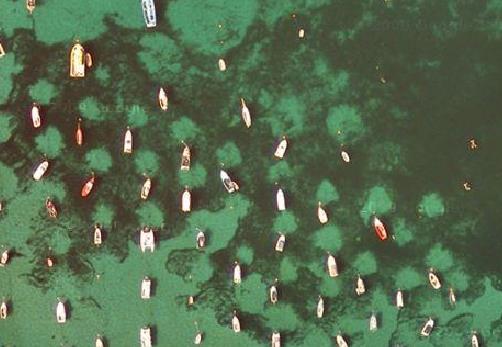
Photo: Cornwall Wildlife Trust
Anchor scars
"A few years ago, we mapped all the bare sand ‘scars’ in the seagrass beds caused by boat anchors. This year’s data shows that every one of them is healing, with new seagrass growing back. The impact has been beyond our expectations, and thanks to the monitoring, we have the science to prove how the eco-moorings benefit seagrass and all the species that rely on it.”David Brown, chair of the partnership steering group, and lead ecologist for the National Trust
Terms & conditions
These eco-moorings are managed by the National Trust on behalf of the Studland Bay Marine Partnership. Please ensure you use the eco-moorings responsibly by following these terms:
- Do not moor a vessel over the stated 5 or 10 tonne weight limit.
- Pay the mooring fee on arrival.
- No rafting of vessels.
- Do not use the moorings when the swell exceeds one metre.
- Use the pick-up line provided.
- Ensure you have adequate marine insurance.
- Respect other users and keep a safe distance from other vessels.
Dorset Coast Forum