
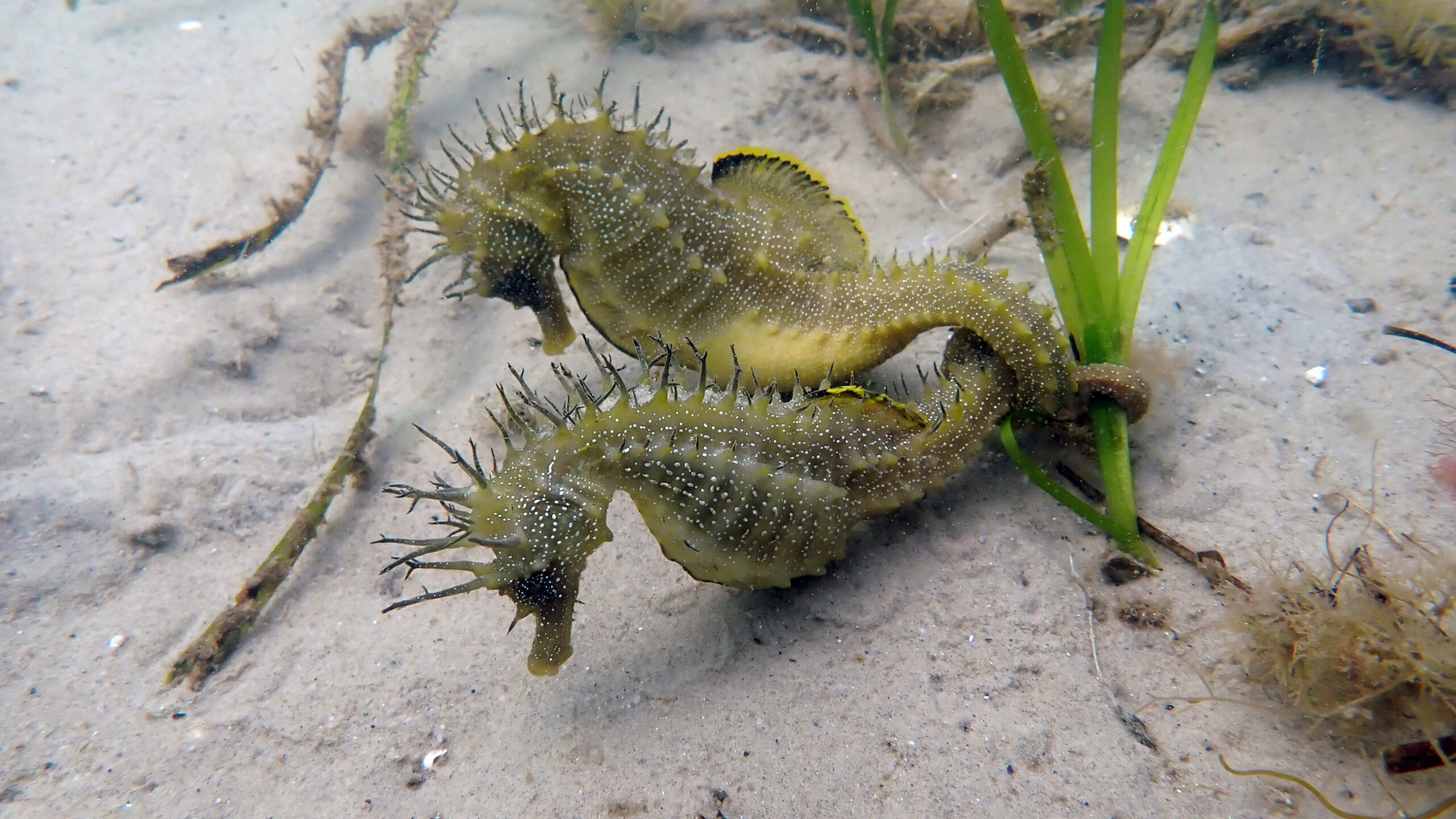
There are two kinds of seahorses in the UK – the spiny seahorse (also known as the long-snouted) and the short-snouted seahorse. Studland Bay is the UK’s most important breeding ground for spiny seahorses.
In spring and summer, Studland’s seahorses hide among the seagrass meadows, where they find both protection and plenty of food. In the winter, they retreat to deeper waters to shelter from the storms.
Photo: Spiny seahorses, © The Seahorse Trust
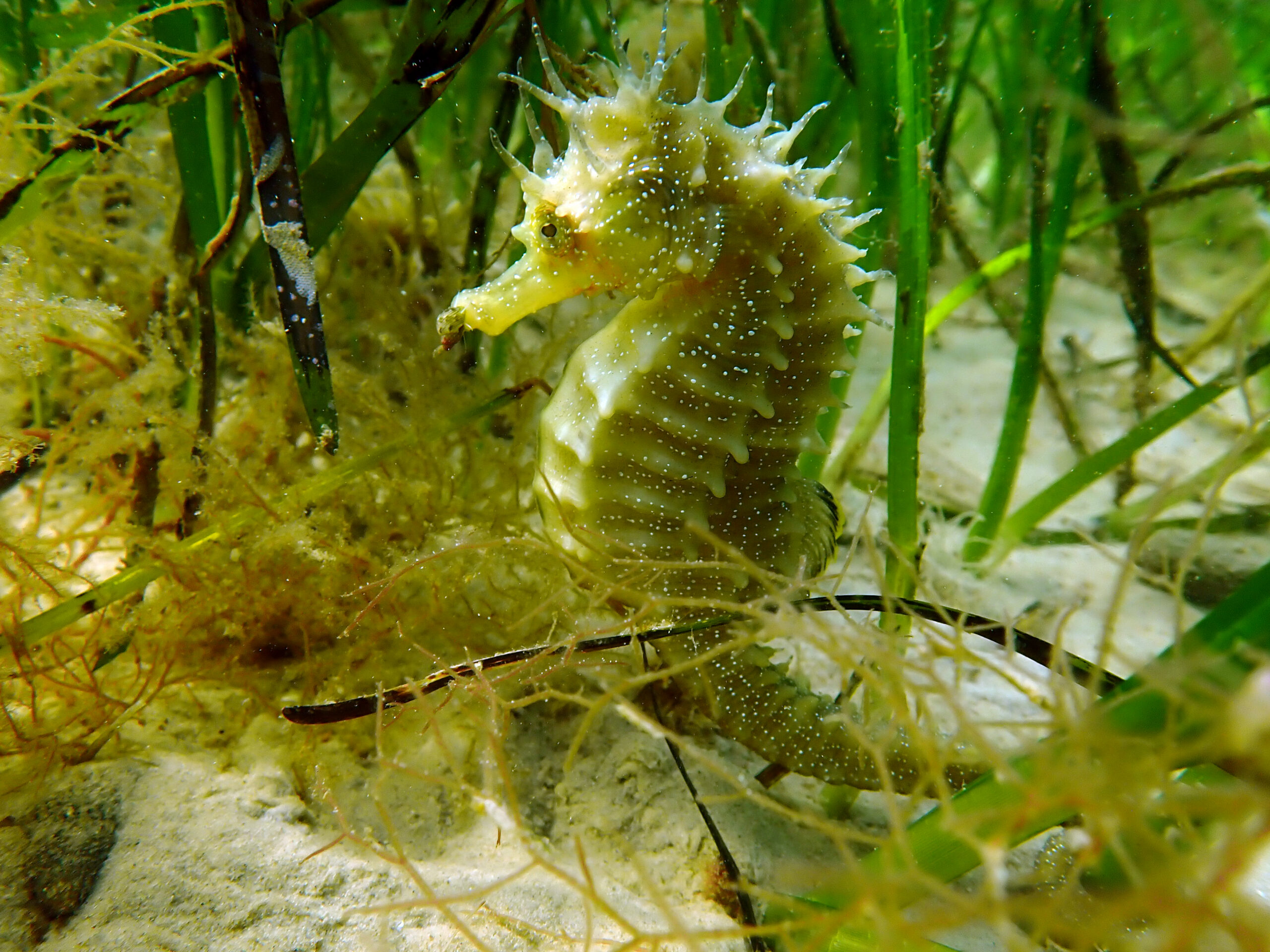
Video: The Seahorse Trust
Spiny seahorses
This is a spiny seahorse – notice the fleshy spines down its back that look like a horse's mane. Of the two UK seahorses, it's this one that's most often found in seagrass meadows. It clings onto the stems of seagrass with its grasping tail.
Fascinating seahorse facts
- Seahorses are fish – they live in water, breathe through gills and have a swim bladder. But they look so unusual, the Victorians thought they were insects!
- Seahorses dance – they engage in elaborate courtship displays that involve synchronized movements, colour changes and intricate rituals. These dances can last for several minutes to an hour.
- Male seahorses give birth – they are the only animals where the male becomes pregnant. The female deposits her eggs into his pouch, where he fertilises them. He can give birth to up to 1,000 live babies, called fry.
- They have incredible eyesight – each eye moves independently, letting them look forwards and backwards at the same time.
- Seahorses come in a huge range of sizes – from 1cm to 30cm. The largest seahorse ever recorded – a whopping 34cm – was found right here in Studland Bay, near Old Harry Rocks.
- Seahorses are masters of camouflage, changing colour to resemble seagrass, sand or rocks. They do this to hide from predators or ambush prey, and in courting rituals.
- Their long, narrow snouts enable them to probe into nooks and crannies for food like shrimps. Then they suck up their prey like a vacuum cleaner.
- Seahorses are surprisingly poor swimmers, relying on a small dorsal fin to propel them. Pectoral fins either side of the head help with stability and steering.
- They have a prehensile tail that works like a monkey’s, allowing them to grip seagrass and stay anchored in currents.
Delve deeper
Find out more about the wonderful world of seahorses by visiting The Seahorse Trust.
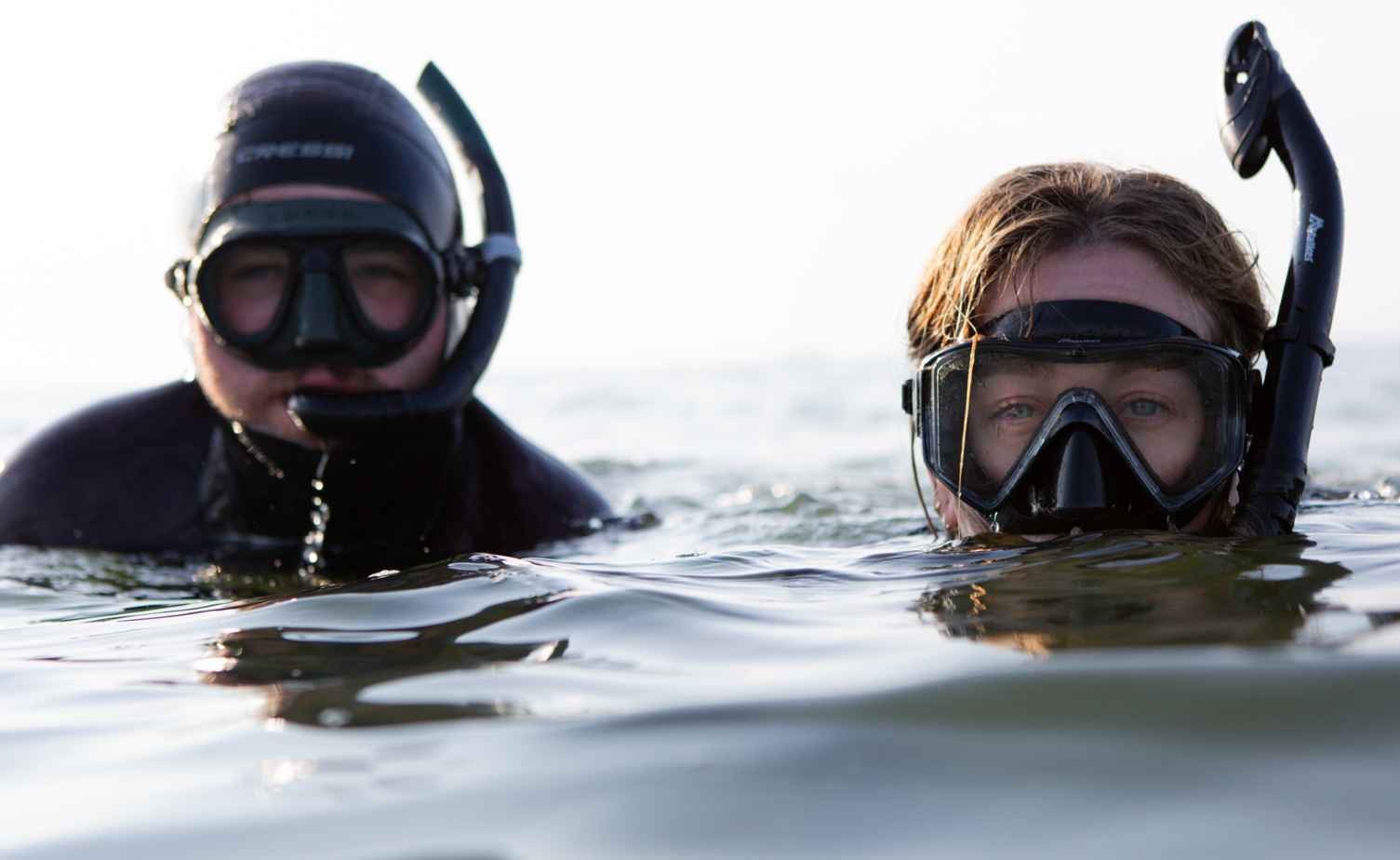
Photo: University of Southampton
Responsible diving
Seahorses are protected by law. If you plan to dive or snorkel in a way that could disturb seahorses – including taking photographs or filming – you must hold a wildlife licence from the Marine Management Organisation.
All photos and images of seahorses on this website were taken by licenced divers.
Find out more
All photos and images of seahorses on this website were taken by licenced divers.