
Studland’s seagrass meadows are full of life, supporting thousands of marine species. Yet these hugely important eco-systems are under threat and facing significant loss around the world. That’s why we are working together to conserve and protect our seagrass meadows.
Unlike seaweed, seagrasses have roots, stems and bright green leaves, forming vast underwater meadows. They are the only flowering plants able to live fully submerged in seawater – and even pollinate beneath the waves.
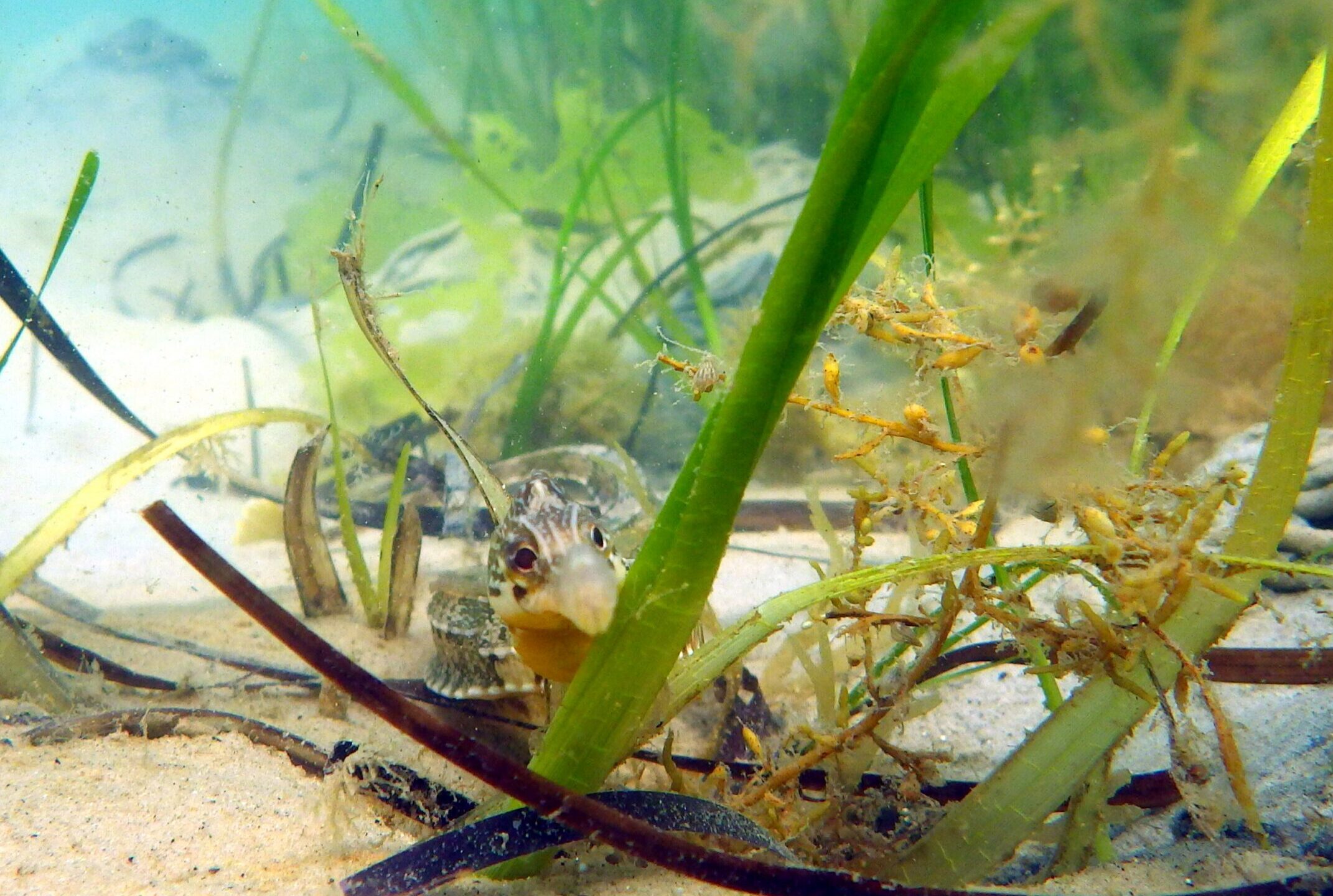
Top photo: Greater pipefish, © The Seahorse Trust
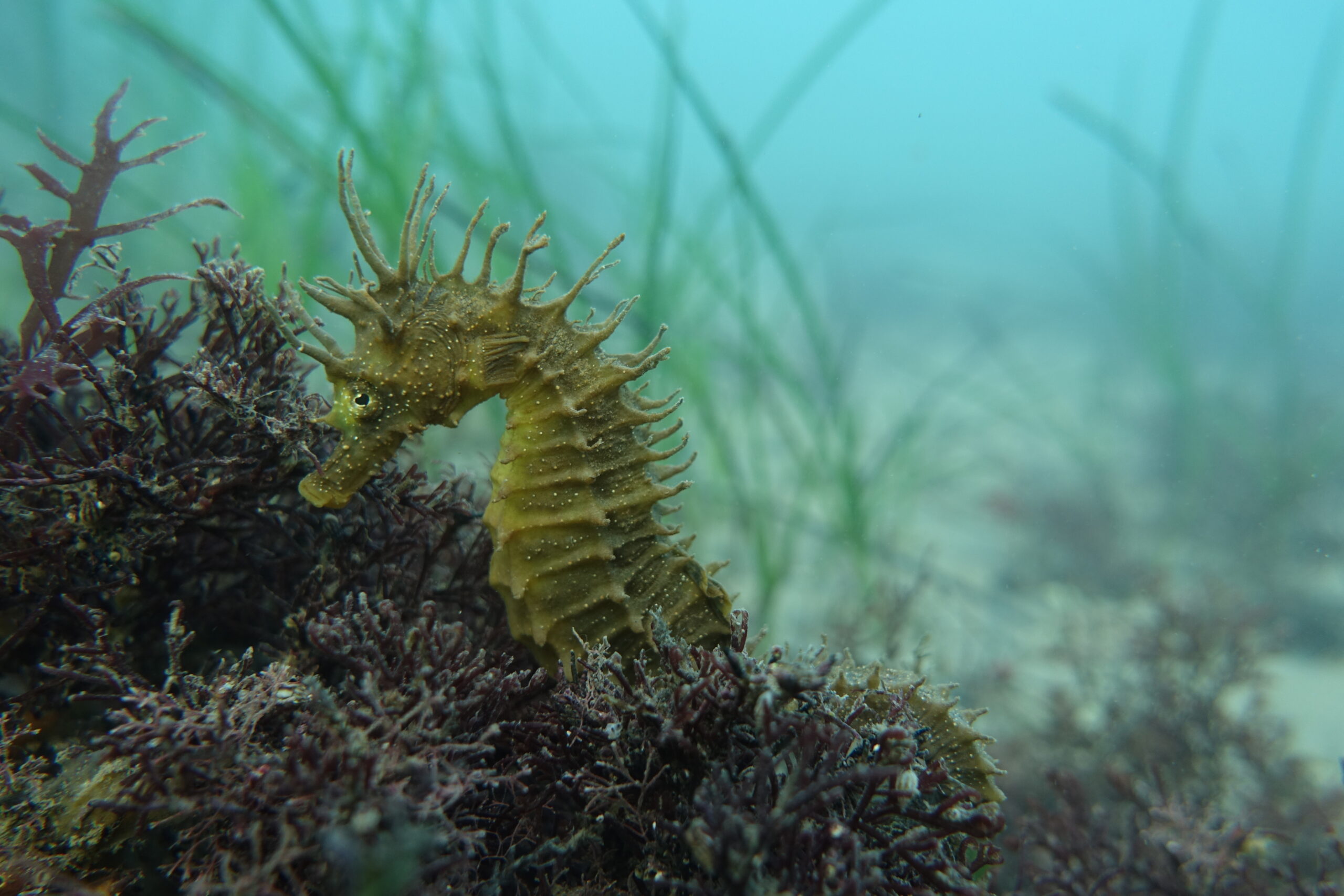
Photo: Chris Brown
Underwater world
• Crabs, shrimps, and other small invertebrates.
• Juvenile fish that later support commercial fisheries like black bream, pollack, sole, plaice and cuttlefish.
• Seahorses – Studland Bay is the only known breeding site in the UK for the spiny seahorse. It’s also home to the short-snouted seahorse.
• Pipefish – all six British pipefish species are found here.
• Overwintering wildfowl – especially brent geese – rely on seagrass beds as a vital food source.
Why save seagrass?
As well as supporting a vast array of marine life, seagrass has other important benefits:
It produces oxygen – Seagrasses are known as the ‘lungs of the sea’ because of the amount of oxygen they produce every day through photosynthesis.
It stores carbon – Seagrass can store huge amounts of carbon. Just like trees take carbon from the air to build their trunks, seagrass takes carbon from the water to build leaves and roots.
As seagrass dies, it collects on the seafloor along with organic matter (carbon) from other dead organisms. If left undisturbed, this can store carbon in the seafloor for thousands of years.
It cleans our oceans – The leaves of seagrass can filter pathogens, bacteria and pollution out of seawater, making our oceans a cleaner and safer environment for everyone.
It protects our coastline – Seagrass acts as a natural defence system. Its roots bind sediment, while its leaves absorb wave energy, reducing erosion and softening the effects of storm surges.
It’s a lifeline for our fisheries – These meadows provide nurseries for commercially important fish species. This creates a better economy for local fishing communities.
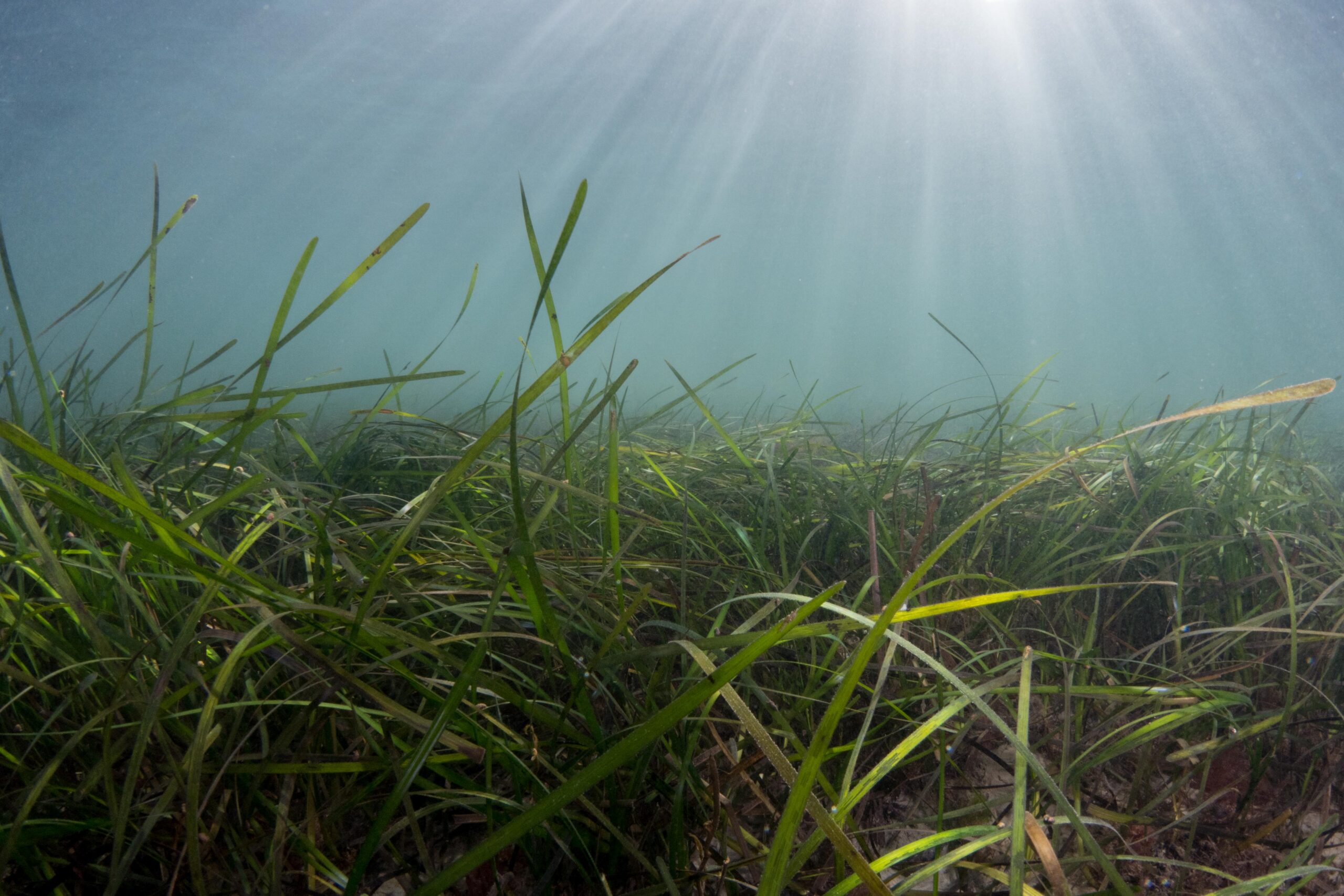
Photo: Jon Bunker
Did you know?
• Seagrass is thought to capture carbon faster than tropical rainforests.
The threat to seagrass
Despite their importance, seagrass meadows are one of the fastest‑declining habitats on earth. The UK has lost approximately 90% of its seagrass meadows, half of which has disappeared in the past three decades. Much of this loss is due to avoidable human activity, including anchoring, pollution and coastal development.
In Studland, traditional anchoring has caused significant damage to seagrass. When an anchor chain drags across the seabed, it:
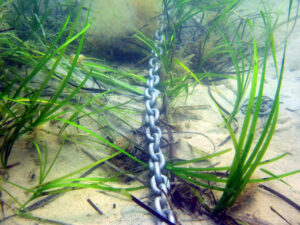
- Scours the sediment
- Uproots delicate seagrass shoots
- Creates bare patches that can take years to recover
According to Natural England’s latest condition assessment, Studland Bay’s seagrass meadows are in an ‘unfavourable condition’, but recovering.
The recovery is largely due to the eco-moorings which have reduced the historic damage caused by traditional anchoring. But it will take many years for the seagrass to recover and spread.
Watch this clip from BBC Springwatch where presenter, Megan McCubbin, explores Studland Bay's seagrass meadows.