
Most people have heard about Studland Bay’s famous seahorses, but the seagrass meadows are home to far more than that. These underwater meadows support a rich, biodiverse community and act as vital nursery grounds for many fish species – including some that are commercially important.
Here are just a few of the weird and wonderful creatures that live here.
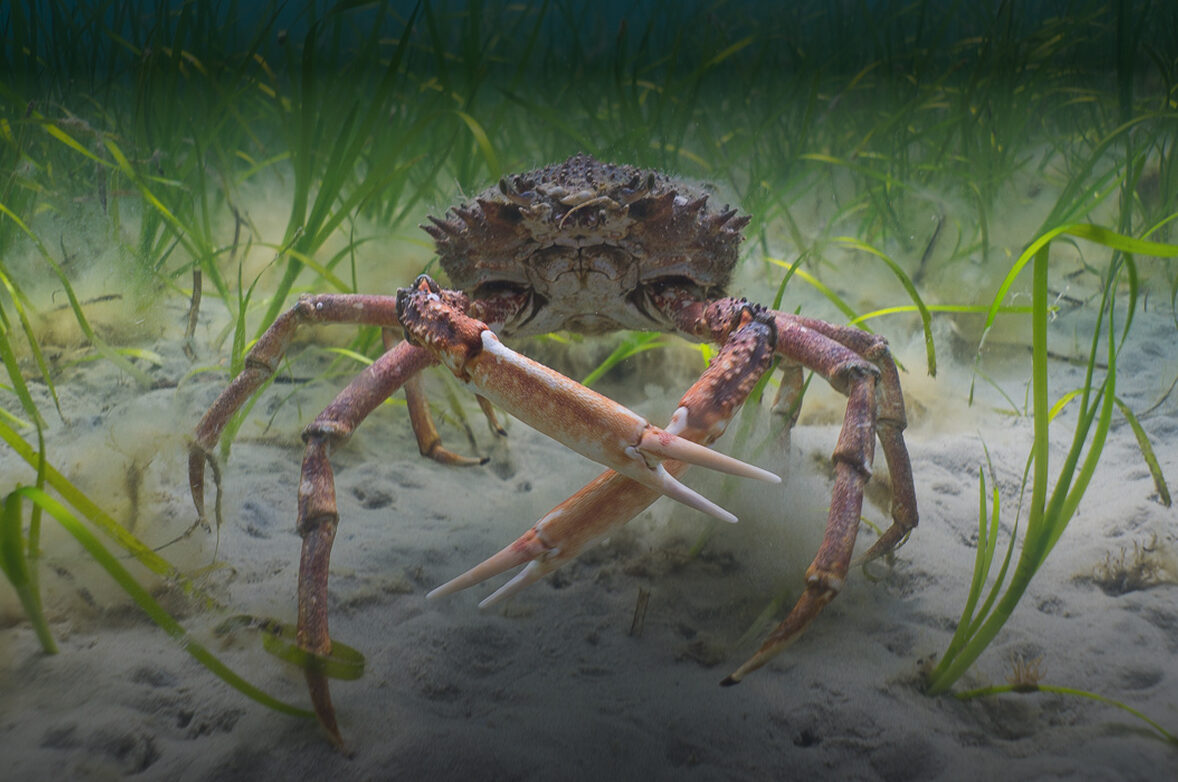
Top photo: Spider crab, © Jon Bunker.
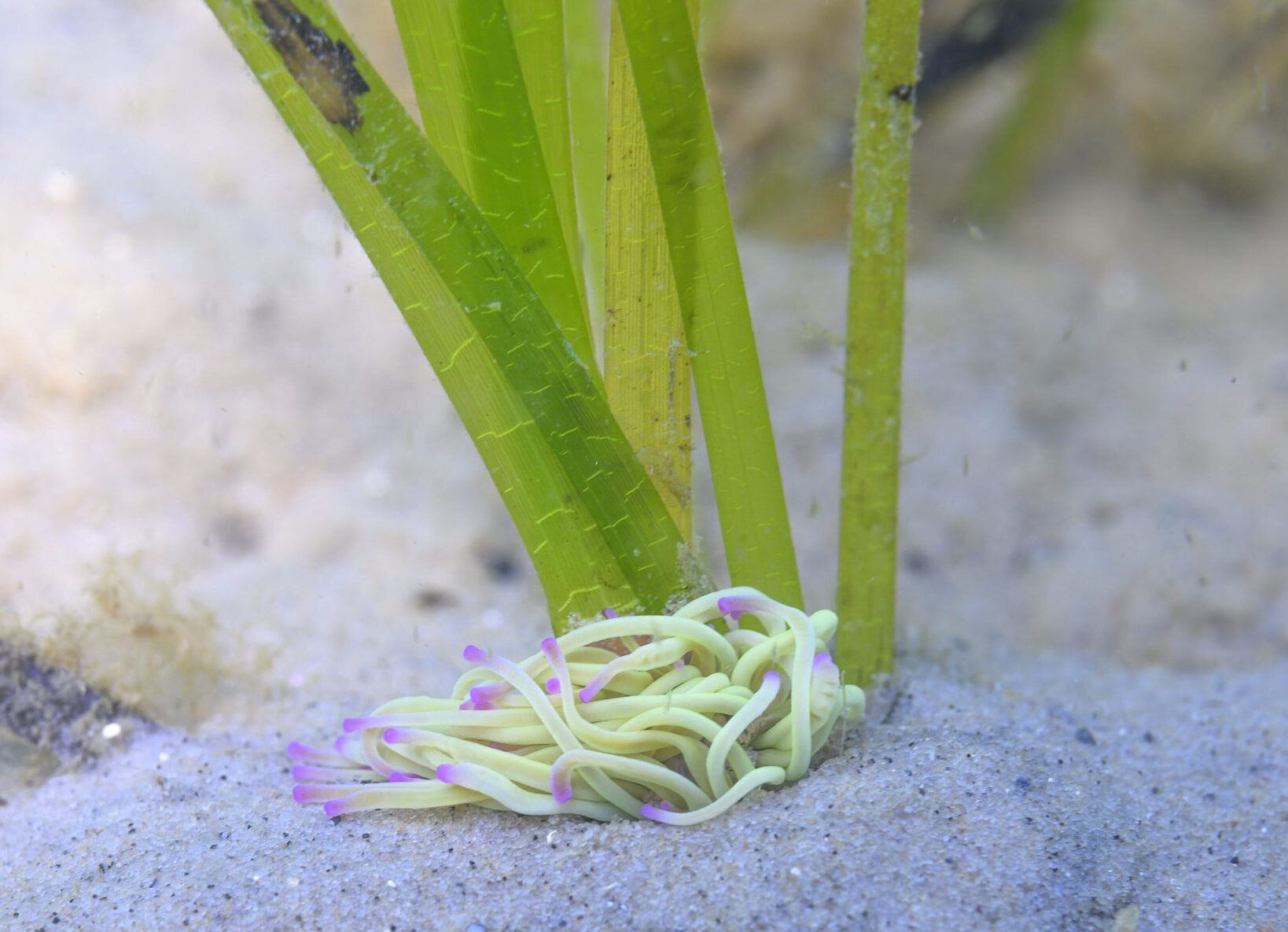
Photo: Tom Mills
Snakelocks anemone
This marine invertebrate has long, wavy, green tentacles tipped with purple. They cling to seagrass, then use their stinging tentacles to catch prey like plankton, prawns and small fish. Their stings are powerful enough for humans to feel – like stinging nettles. The green colour of the tentacles is due to a kind of algae. They also contain a special protein that makes them glow fluorescent green under ultraviolet light!
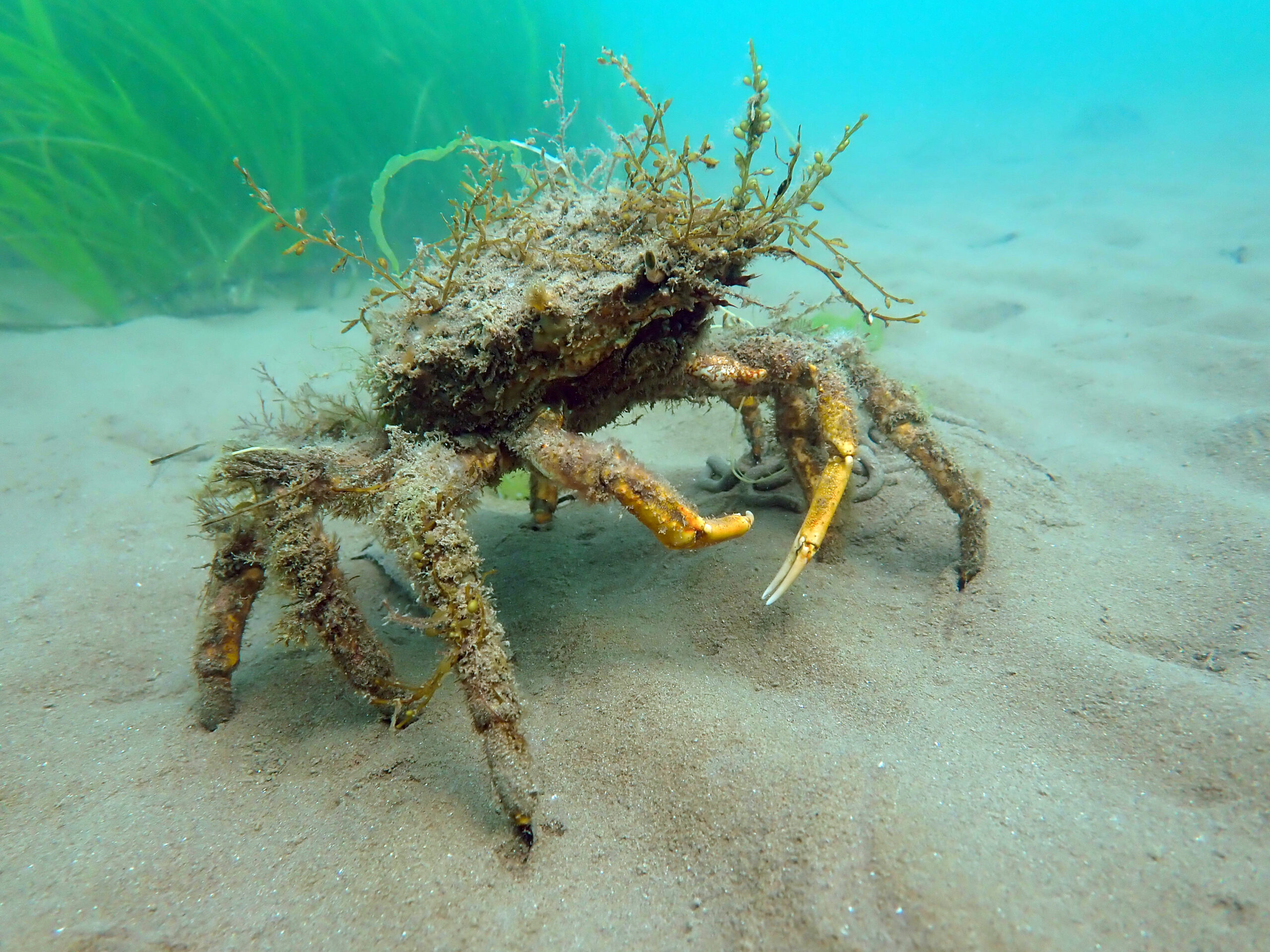
Photo: The Seahorse Trust
Spiny spider crab
Spiny spider crabs have orange bodies and long spindly legs, and are often covered in algae. As the crab grows, its hard outer shell can’t stretch, so it splits open at the back and a soft, floppy, defenceless crab emerges. Its new shell hardens within a few days. Adult Spiny spider crabs gather in huge groups during this moulting phase. The larger males shed first, and the smaller females later, safely hidden beneath a pile of crabs and empty shells.
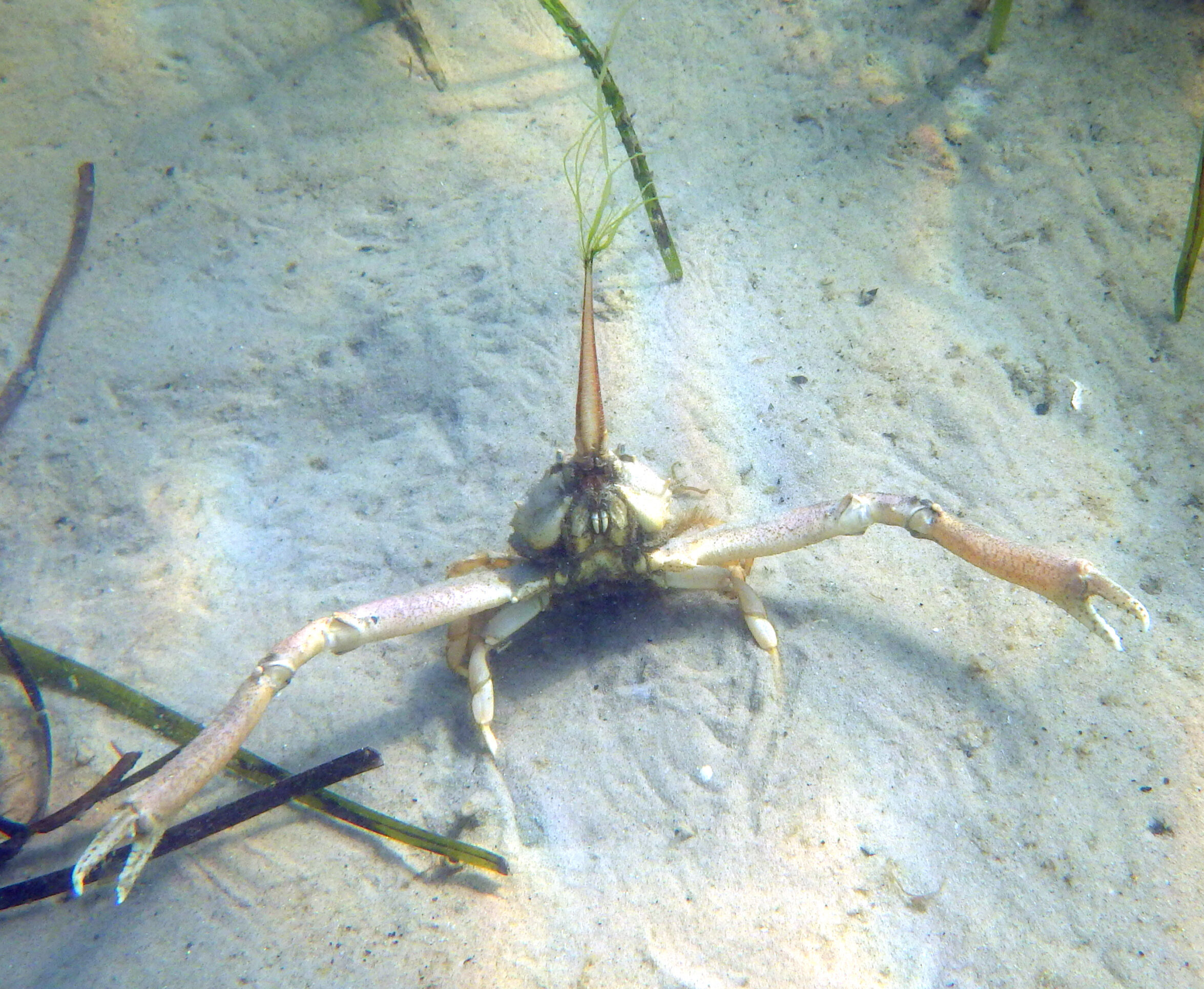
Photo: The Seahorse Trust
Masked crab
This crab spends its life buried in sand, with only its antennae poking out like a snorkel. The antennae lock together with tiny hairs, letting it draw in oxygenated water and sense movement above. Males have much longer claws, which they use to fight for females. And if you spot what looks like a dead crab on the beach, check the back – it may just be an empty moulted shell.
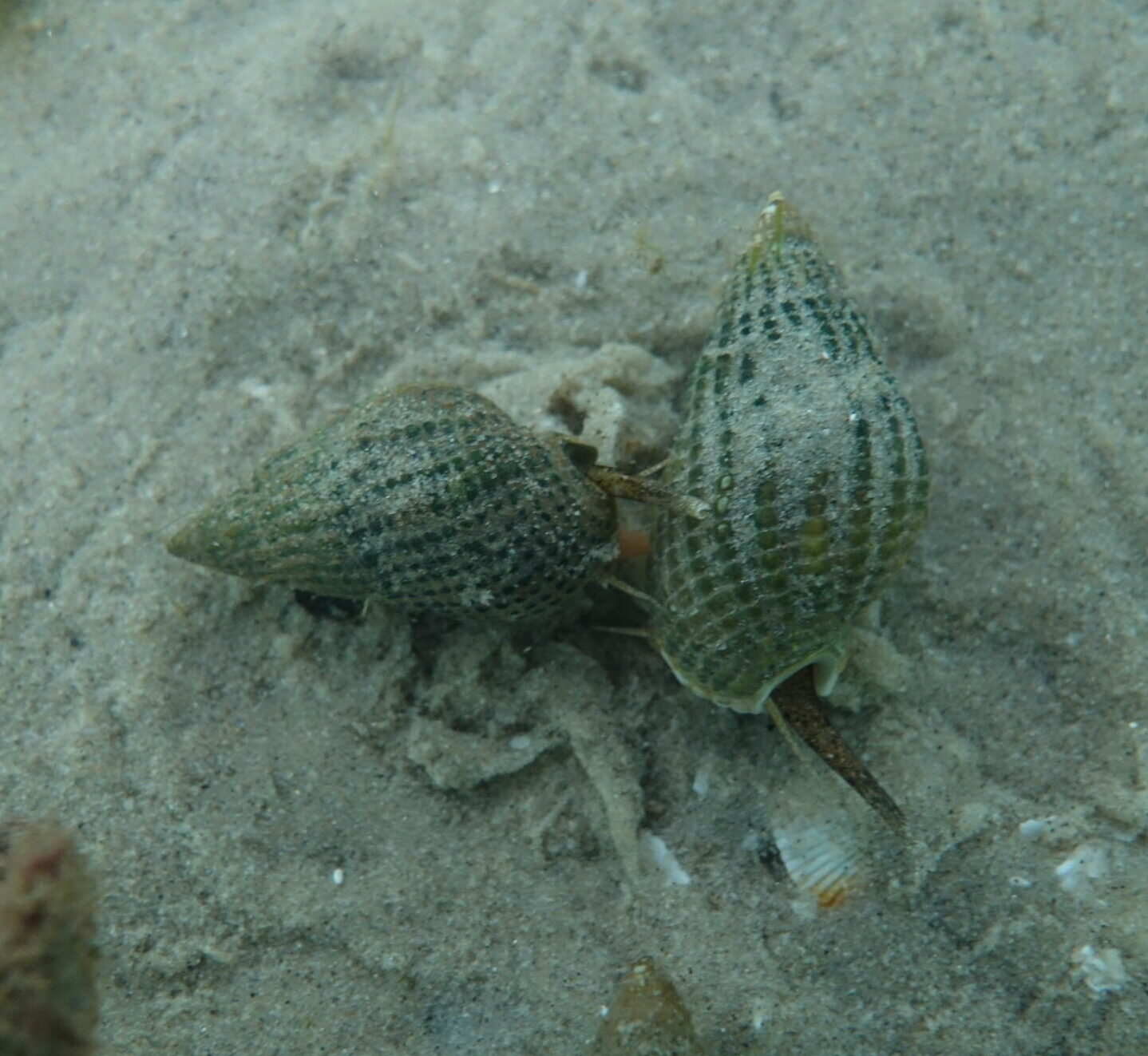
Photo: Lou Parker
Netted dogwhelk
Netted dogwhelks often bury themselves in sand, leaving only their siphon poking up so they can detect food. They often gather in large numbers to feast on carrion, but they are also skilled predators. A dog‑whelk can drill a tiny hole through another shellfish’s armour, inject digestive enzymes, then suck up the ‘prey soup.’ Their pink eggs, sealed inside clear lyre‑shaped cases, can often be spotted along blades of seagrass.
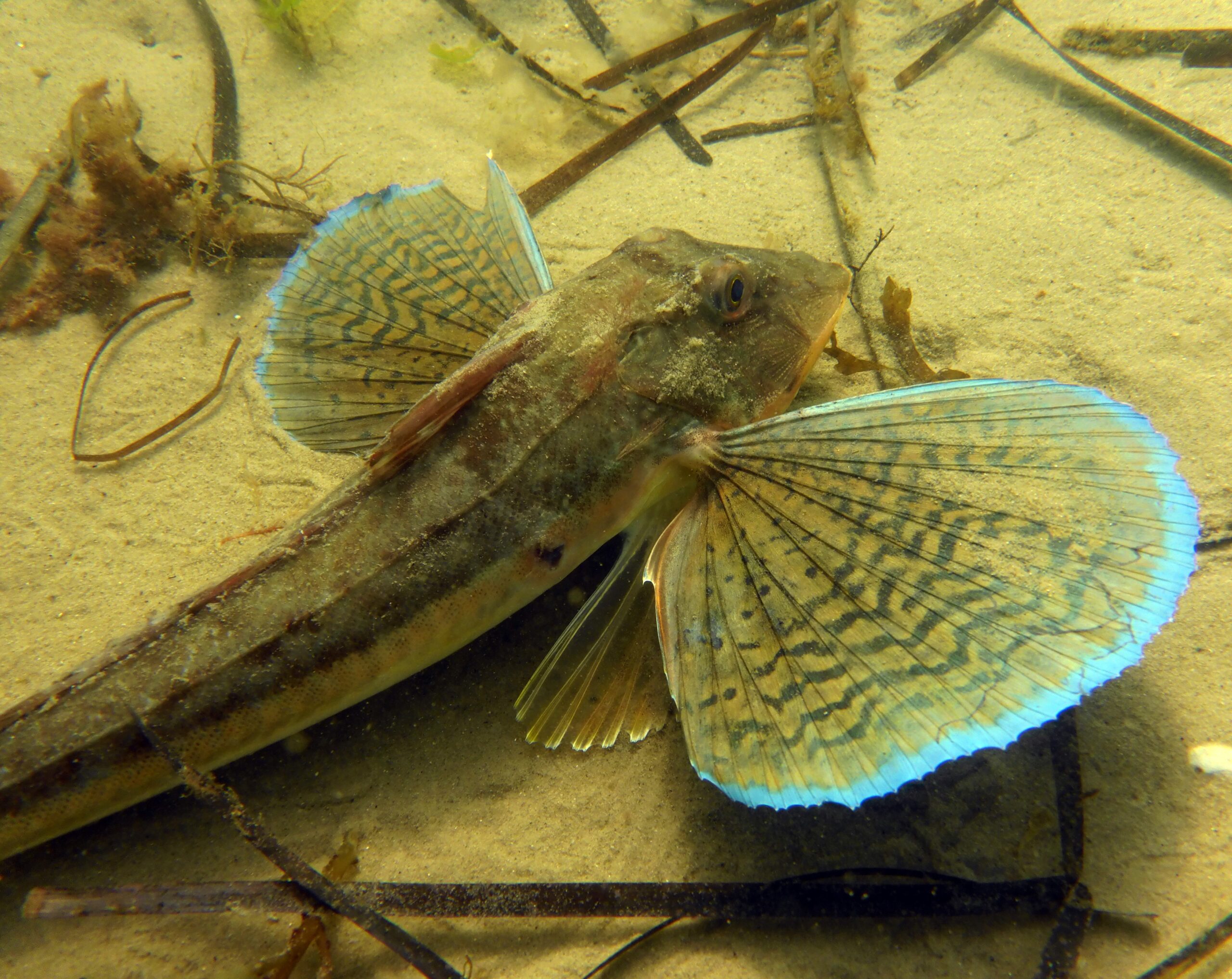
Photo: The Seahorse Trust
Gurnard
Gurnards are bottom‑dwelling fish that hunt worms and crustaceans by probing the seabed with modified fin rays that look like legs, giving the impression that the fish is walking. When the pectoral fins fan out, edged in vivid blue, they give the impression of wings. Gurnards communicate with grunts and croaks, earning them the nickname ‘talking fish’ – and giving divers a surprise when they hear them underwater!
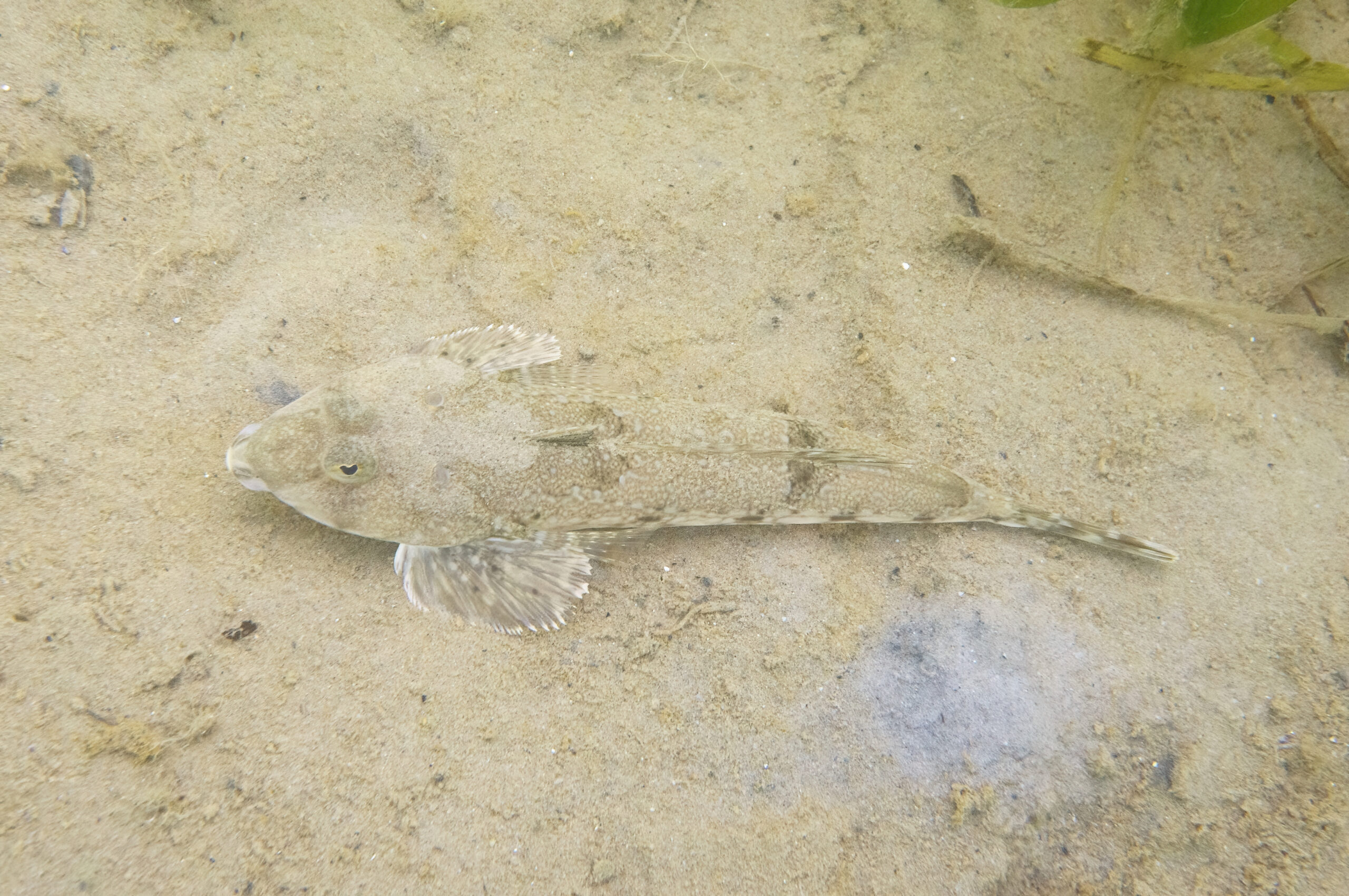
Photo: Tom Mills
Common dragonette
This bottom‑dwelling fish has a down‑turned mouth to hoover up tiny creatures, while eyes perched on top keep watch for predators. It can shift its colours to blend into the seabed, then vanish in a cloud of sand when startled. Females are a dull brown colour, but males transform during breeding season, flashing brilliant orange, yellow and electric‑blue streaks as they perform an elegant, synchronised ‘mating dance.’
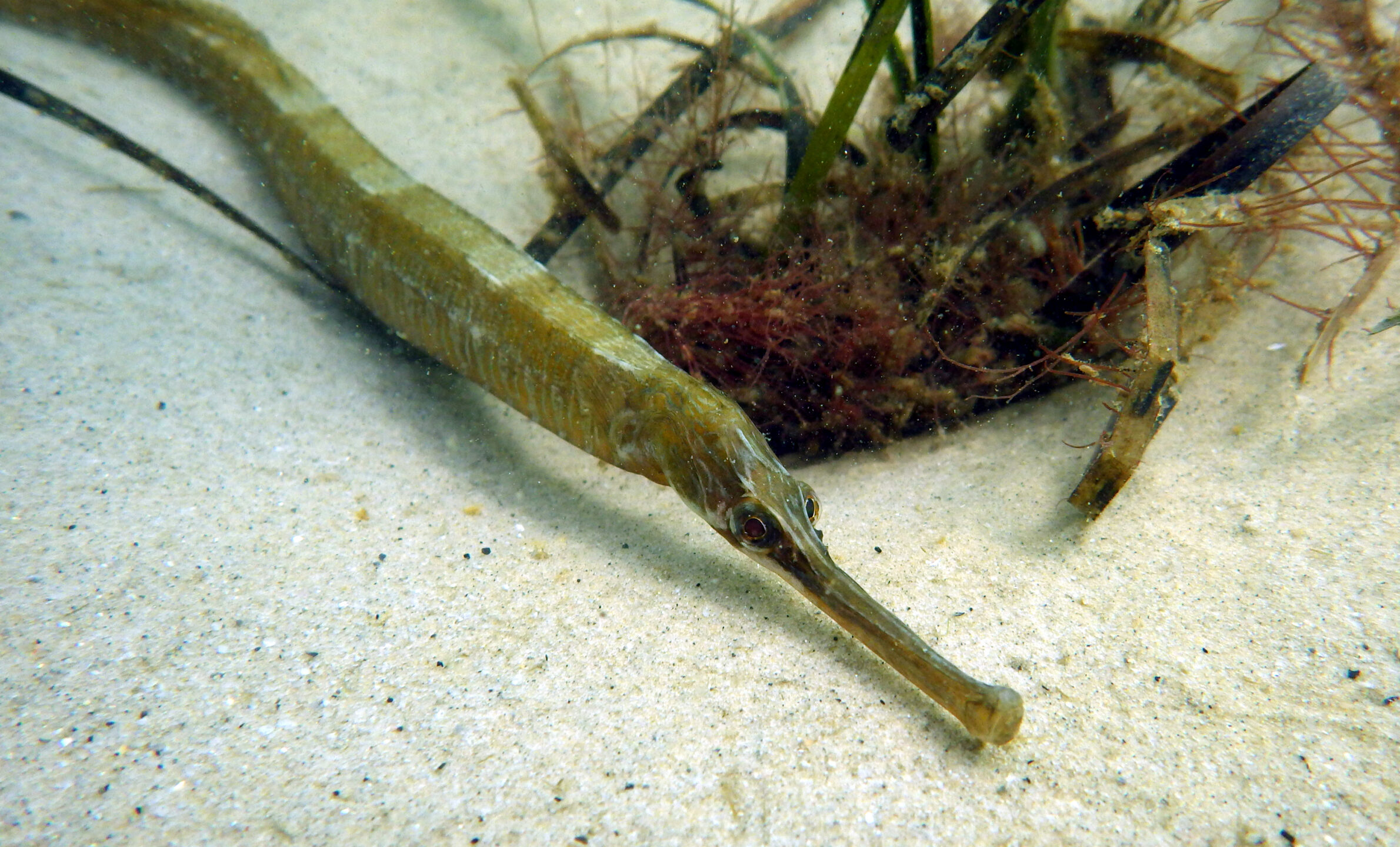
Photo: The Seahorse Trust
Greater pipefish
Greater pipefish look like stretched‑out seahorses, perfectly camouflaged to match their surroundings. They rest among seaweed on the seabed, using their long snouts like tiny vacuums, as seahorses do, to suck up shrimps and plankton with a loud, clicking gulp. These elusive fish can even be detected by underwater acoustic equipment, thanks to the distinctive sounds they make while feeding.
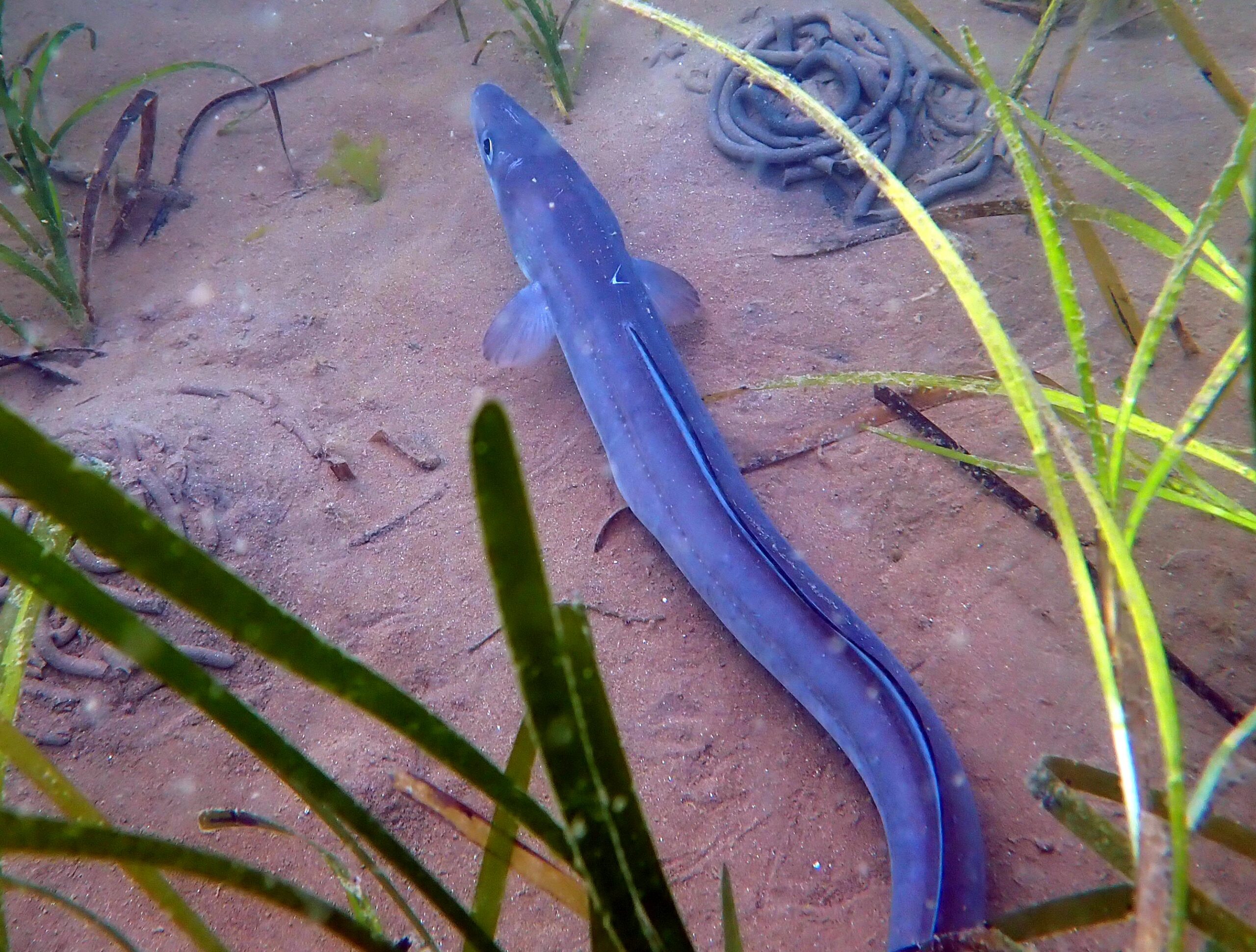
Photo: The Seahorse Trust
Conger eel
Conger eels are powerful predators with long, snake‑like bodies and smooth skin in shades of grey, green or blue. Their large eyes, jutting upper jaw and sharp teeth give them a fearsome look, yet they’re mostly shy of humans. They ambush fish and crustaceans from rocky lairs, but will also scavenge for carrion along the seabed. When tackling larger prey, they perform a dramatic ‘death roll’, clamping down and spinning like a crocodile.